Startups and spirituality
The only two things I’ve ever really cared about. I’ve been building and selling things since I was fourteen — some of it worked, and the parts that didn’t are the reason a+ exists.
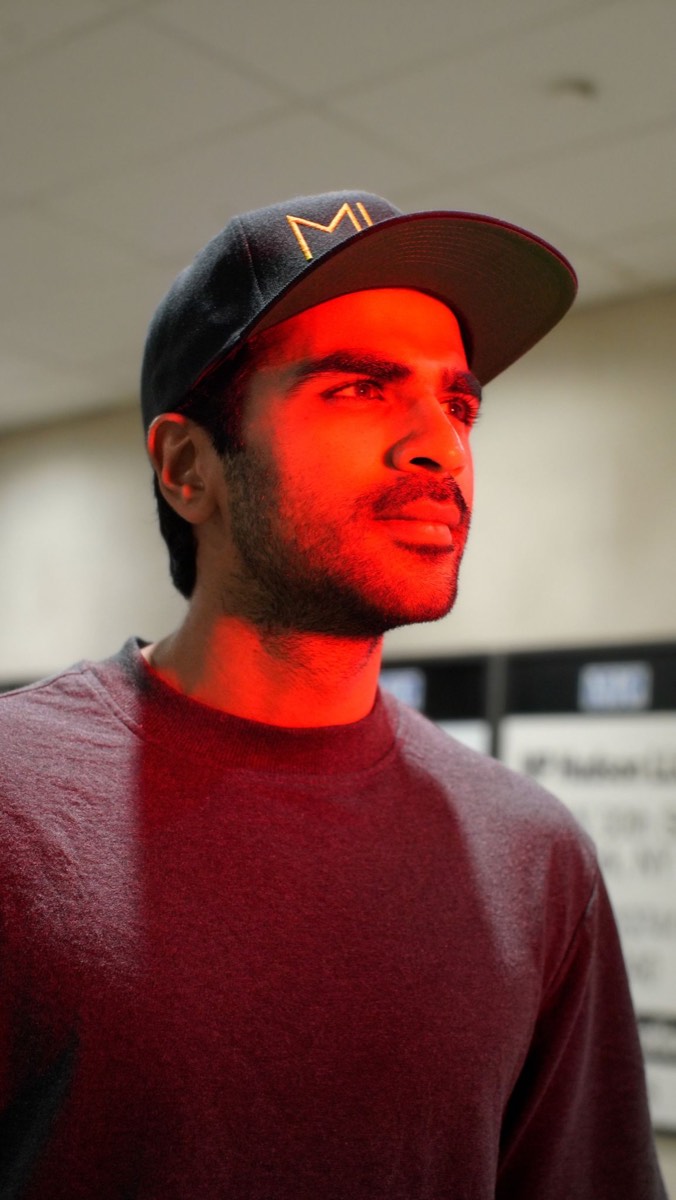
My first job, at fourteen, was finding leads for a stone wholesaler. I scraped Alibaba and Amazon to do it, with no idea that had a name. That is how I found out there was such a thing as code.
After that: costume jewellery out of my father’s shop, construction sites, and a stint as assistant to the chairman of the Bombay Stock Exchange.

ION Education, the first company. We taught students to invest by sitting with them while they opened their first account.
10,000 students across 50 universities in three years.


Our first term sheet came from an SVP at Google. I asked for his time rather than his money, and ended up on the top bunk of a San Francisco house called the Hacker Quarters, where my flatmates taught me to code.
I launched OneShop on my twenty-first birthday. Thousands of merchants waiting. Then my visa fell through.

London, seed round raised. My co-founder wanted three times the equity, or he would delete the codebase and have my visa cancelled. I said no, and watched him burn it down.
$50 left to my name. Popcorn, fifty-cent bagels, and a hundred borrowed from my brother.
In 2015 I decided to get a job. The first company I wrote to was Haptik. I met Aakrit the next day and was running product and growth by the end of that week.
Eighteen months: $16M raised, 20 → 650 people. Reliance bought it for $100M.


I had just watched Elon talk about the Model 3, so I converted it instead. My father thought I had lost it. I took that as a sign.
Mornings and nights at IIT Bombay, welding cells into packs of my own, alongside the job. In 2018 a scooter moved on one of them. That was ION Energy.


The largest battery-management supplier in India — Hero, and 250,000 units deployed. Endurance bought the business in 2022 for $40M.
Alex and I still run Altergo.
90% of startups die, and the whole ecosystem is built around that number. An investor takes a hundred shots and wins the match with two. The founder is all-in on one.
Three things kill three-quarters of them: no product-market fit, co-founder conflict, no capital. I have lost companies to two of the three. a+ is the infrastructure I wish had existed.
The rest of it The part that isn’t work. Open it if you like.


